Tired of ‘Just one more notification’? How I finally took back my focus
We’ve all been there—endless pings pulling us away from what matters. That *ding* feels urgent, but later we wonder: *What did I even accomplish?* I used to lose hours to mindless scrolling, until I realized it wasn’t willpower I lacked—it was a system. This isn’t about deleting apps or going off-grid. It’s about reshaping how we interact with technology, one smart setting at a time. And honestly, it changed everything. I started noticing the small moments I was missing—my daughter’s laugh when she told a silly joke, the quiet peace of morning coffee without rushing to check my phone. That’s when I knew something had to change. Not because I’m bad with tech, but because the tech wasn’t working *for me* anymore. It was working *on me*.
The Constant Buzz: Living in Reactive Mode
Picture this: your eyes flutter open, and before your feet even touch the floor, your hand reaches for the phone. The screen lights up—emails, social media alerts, news updates, a text from your sister, a calendar reminder, a delivery notification. Before you’ve had a sip of water, your brain is already in motion, reacting to other people’s priorities. I used to think this was just how modern life worked. I told myself, *If I stay on top of everything, I’ll feel more in control.* But the truth? I felt more scattered than ever. By 10 a.m., I’d already responded to five different conversations, checked three shopping apps, and forgotten what I’d walked into the kitchen for. My mind felt like a browser with 50 tabs open—nothing fully loaded, everything competing for attention.
And it wasn’t just the time I was losing. It was the emotional weight. That low hum of guilt—*I should be doing something more meaningful*—followed by the frustration of never quite finishing anything. I’d sit down to help my son with homework, only to glance at a buzzing phone. A quick look turned into ten minutes of scrolling through updates that didn’t matter. Then came the pang of regret: *I missed his smile when he figured out the math problem.* These weren’t big moments I was losing—they were small, quiet ones. The kind that, when added up, make up the heart of a day. The kind that make you feel present in your own life.
What I didn’t realize then was that this wasn’t just a personal failing. It wasn’t that I lacked focus or discipline. It was that the devices I relied on every day were designed to keep me reactive. Every notification, every vibration, every red badge on an app icon—it’s all carefully engineered to pull me back in. Tech companies spend millions studying how to make us *look*, *tap*, and *stay*. And it works. We’re not weak for falling into the trap. We’re human. But recognizing that was the first step toward change. I didn’t need to be stronger. I needed to be smarter about how I used my tools.
The Myth of Multitasking: Why Our Brains Are Losing
Let’s talk about multitasking—something so many of us pride ourselves on. ‘I can cook, answer texts, and keep an eye on the kids—all at once!’ Sound familiar? I used to wear that as a badge of honor. But here’s what science tells us: our brains don’t actually multitask. Not really. What we’re doing is switching tasks, over and over, in rapid fire. And each switch costs us time, focus, and mental energy. Think of it like this: imagine you’re baking a cake, carefully measuring flour, when someone walks in and asks, ‘Did you pay the water bill?’ You stop, shift your brain to that task, answer, then try to return to baking. But now you’re not sure—did you already add the sugar? That moment of confusion? That’s a *context switch*. And your brain experiences that same disruption every time a notification pulls your attention away.
Researchers call this *cognitive load*—the mental effort required to manage multiple demands. Every alert adds to that load, even if you don’t fully engage. Just seeing a message pop up creates a tiny spike of stress. Your brain registers it as something to deal with, even if you ignore it. Over time, that constant low-level pressure wears you down. You feel tired, irritable, or foggy—not because you’re lazy, but because your mind is working overtime just trying to keep up.
I remember one afternoon when I was trying to write a thank-you note for a neighbor who’d watched my dog. Simple, right? But my phone kept buzzing—first a delivery update, then a social media tag, then a group chat blowing up. Each time, I’d glance, tell myself *just one second*, and come back. But it took me nearly 20 minutes to finish a three-sentence note. And when I finally did, I had to reread it twice because I’d lost my train of thought. That’s when it hit me: I wasn’t being efficient. I was being *interrupted*. And the worst part? I didn’t even realize how much it was costing me until I stepped back and saw the pattern. The good news? Once you understand how your brain really works, you can stop fighting yourself and start working *with* your mind instead.
Small Settings, Big Shifts: The Power of Notification Hygiene
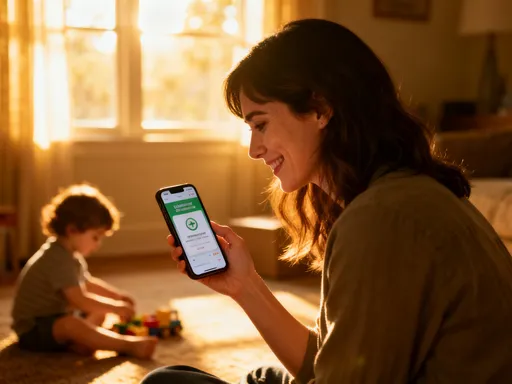
So what changed? I started small—really small. Instead of trying to overhaul everything at once, I picked one app: Instagram. I loved it for photos of friends and inspiration, but the constant pings were driving me crazy. So one morning, during my coffee, I went into my phone settings and turned off *all* notifications from that app. No sounds, no banners, no badge numbers. Just silence. And honestly? It felt weird at first. Like I was missing out. But by the end of the day, I noticed something: I wasn’t constantly reaching for my phone. I finished folding laundry without stopping to check a buzz. I had a real conversation with my husband without glancing at the screen. That one change created space—mental and emotional.
That’s when I realized: I didn’t need more willpower. I needed better design. Our phones come loaded with features we rarely use, like *Focus Modes*, *Scheduled DND*, and *App Limits*. These aren’t just for tech geeks—they’re tools for anyone who wants to feel more in control. I started using *Do Not Disturb* during dinner and the hour before bed. I set up a *Work Focus* mode that only allowed calls from family and my assistant. And I turned off notifications for everything that wasn’t time-sensitive—shopping apps, newsletters, most social media. The key wasn’t cutting everything out. It was asking: *Does this alert need to interrupt me right now?* Most of the time, the answer was no.
One of my favorite changes? Scheduling ‘focus windows’—30 to 60 minute blocks where only my closest family can reach me. During that time, my phone goes into grayscale mode, which makes it less tempting to scroll. I use these blocks to write, plan meals, or just sit with my thoughts. At first, I worried I’d miss something important. But in six months, I haven’t. Emergencies still get through. Everything else can wait. The freedom that comes from knowing you’re not on call 24/7? It’s priceless. And the best part? These settings take less than ten minutes to set up. You don’t need to be a tech expert. You just need to care about your time and peace.
Building the Habit: From One Change to Lasting Control
Change doesn’t happen overnight. I didn’t wake up one day and magically have perfect tech habits. It started with that one app—Instagram—and grew from there. The first week, I’d forget and open the app out of habit. But because there were no alerts, I didn’t feel the urgent pull. I could check it when *I* wanted, not because my phone told me to. That small win gave me confidence. So I moved to the next app—email. I turned off desktop alerts and set specific times to check: once in the morning, once after lunch, and once in the evening. No more jumping every time a new message arrived.
What helped most was linking these changes to routines I already had. Every morning, while my coffee brewed, I’d review my focus settings. Every Sunday night, I’d do a quick check-in: *Did I feel overwhelmed this week? Which app caused the most distractions?* It became part of my self-care, like moisturizing or tidying the kitchen. And over time, I noticed a shift. I wasn’t just reacting less—I was *choosing* more. I could decide when to connect, when to pause, when to be fully present. That sense of agency made all the difference.
Behavioral science calls this the *cue-routine-reward* loop. You identify a trigger (like a buzzing phone), change the response (ignoring it or having it silenced), and reinforce it with a positive outcome (calm, focus, accomplishment). The more you repeat it, the stronger the habit becomes. I celebrated small wins—finishing a book chapter without interruption, having a phone-free dinner, completing a work task in half the time. These moments reminded me that I wasn’t losing connection. I was gaining control. And that made the new habits stick.
Protecting What Matters: Time, Focus, and Emotional Space
When I started this journey, I thought it was about productivity. I wanted to get more done. But what I didn’t expect was how much more *present* I’d feel. Less distraction didn’t just free up time—it freed up *attention*. And attention is the most precious thing we have. It’s how we experience life. When I stopped jumping at every ping, I started noticing things I’d been missing: the way sunlight hits the wall in the late afternoon, my daughter’s excitement when she learns a new word, the quiet joy of finishing a puzzle with my husband.
One evening, my son asked me to help him build a spaceship out of cardboard boxes. In the past, I’d probably have one eye on the project and one on my phone—answering messages, checking the weather, glancing at the clock. But that night, I left my phone in another room. We laughed, we painted, we taped and taped again. And when he said, ‘Mom, you’re the best builder,’ it wasn’t just about the spaceship. It was about the fact that I was *there*. Fully. That moment meant more than any notification ever could.
This isn’t just about managing tech. It’s about protecting your inner world. Your focus, your calm, your ability to think deeply and feel deeply—these are the things that make life rich. When we give them away to endless alerts, we trade what’s truly valuable for what’s merely urgent. But when we reclaim them, we get more than time. We get presence. We get peace. And we get to show up—not just for our to-do lists, but for our lives.
Family and Shared Calm: Extending the Practice Beyond Yourself
One of the most beautiful side effects of my changes? It started to ripple through my home. My kids noticed I wasn’t checking my phone at the dinner table. My husband saw me more relaxed in the evenings. And slowly, we began having conversations about how we all use our devices. We didn’t impose rules. We shared what was working. I showed my daughter how she could mute game notifications so they wouldn’t buzz during homework. My son liked the idea of a ‘quiet hour’ before bed, so we set up a family DND mode that turns on at 8 p.m.
It wasn’t about control. It was about care. We weren’t banning technology—we were learning to use it together, in a way that supported our connection instead of stealing from it. Dinner became a real conversation time. We started playing board games without interruptions. Even our walks around the neighborhood felt different—more talk, less tapping. I didn’t realize how much my habits were shaping the family atmosphere until I changed them. Now, when my daughter says, ‘Let’s go outside and look for bugs,’ and I don’t reach for my phone, she smiles. That’s the kind of moment I want to protect.
For other parents, I’d say this: you don’t have to be perfect. Start with one change. Maybe it’s no phones at the table. Maybe it’s charging devices outside bedrooms at night. Or maybe it’s just modeling what calm looks like—putting your phone down, taking a breath, and being present. Kids notice more than we think. And when they see us choosing presence over pings, they learn it’s possible. That’s a gift we can give them—one that lasts far beyond any screen time.
Living with Intention: Technology That Serves You
Looking back, I see that this journey wasn’t really about notifications. It was about values. It was about deciding what kind of life I wanted to live—and making sure my daily habits reflected that. Technology isn’t the enemy. It’s a tool. But like any tool, it works best when used with purpose. When we let it run in the background, dictating our attention, it pulls us away from what matters. But when we take charge, even in small ways, it can support us, connect us, and even bring us joy.
Today, my phone still buzzes—but only when it truly needs to. My family knows they can reach me in an emergency. Important work messages get through. But the noise? The constant pressure to respond? I’ve turned that down. And in its place, I’ve found something quieter, deeper, and more meaningful: the freedom to choose. To focus on a project. To listen to a story. To sit in silence. To be still.
If you’re tired of feeling like you’re always reacting, I want you to know this: you’re not broken. You’re not behind. You’re just using a system that wasn’t designed for peace. But you can redesign it. Start small. Pick one app. Turn off one alert. See how it feels. You might be surprised by how much calmer, clearer, and more in control you feel. Because when we stop letting technology pull us in every direction, we make space for what really matters—our time, our attention, our lives. And that’s the most powerful upgrade of all.